
Come abbinare le catene da uomo 2027: senza esagerare
The difference between a good chain layered look and a try-hard layered look is roughly two inches.

Layered chains spaced 2-4” apart at chest level read as deliberate styling. Layered chains crowded into the same 1” zone at the collarbone read as costume. That single rule explains most of what separates good men’s chain layering from bad in 2026.
This is the practical guide for UK men in 2026.
I run Monrich, a UK men’s jewellery brand. Disclosure first.
You can see the current men's chains line-up for reference as you read.
The basic rule

Layered chains should sit at distinct chest positions, not crowded at the same height.
For UK men in 2026, the most flexible layered chain spacing is 3-4 inches between chains. A 20” chain at the collarbone + a 24” chain at mid-chest creates a clean two-chain look with clear visual hierarchy.
If chains sit too close together, they read as a single confused necklace rather than two intentional pieces. If chains sit too far apart, the layered effect is lost and they read as two unrelated pieces.
Two-chain combinations

Tight stack (close spacing): - 18” + 20” (2” gap) - 20” + 22” (2” gap) - Reads as compact, formal-leaning
Medium stack (standard spacing): - 20” + 22” + 24” (2” + 2” gap = 4” total spread) - 22” + 24” (2” gap) - Most versatile spacing for daily wear
Spread stack (wider spacing): - 20” + 24” (4” gap) - 22” + 26” (4” gap) - Reads more casual, streetwear-influenced
Dramatic stack (very wide spacing): - 18” + 26” (8” gap) - 20” + 28” (8” gap) - Reads as confident statement, evening or weekend
For most British men in 2026 starting with chain layering, 20” + 22” or 22” + 24” in matching metal tones is the safest starting point.
Three-chain stacks require more confident styling but produce a stronger statement.
Three-chain combinations

Three-chain stacks require more confident styling but produce a stronger statement.
Recommended three-chain combinations:
- 18” + 22” + 26” (4” + 4” gaps, balanced spread)
- 20” + 22” + 24” (2” + 2” gaps, tight balanced)
- 18” + 20” + 24” (2” + 4” gaps, asymmetric)
Three-chain styling rules:
- Same metal tone across all three for cleanest look
- Vary the chain styles: e.g., one Cuban, one rope, one box (don’t use three identical chains)
- Vary the widths: e.g., one 2mm + one 3mm + one 5mm (graduated thickness)
- One chain as the “anchor”: typically the thickest or longest
- Match clasps positioned at the back so they don’t crowd at the front
Three-chain stacks work best in casual to evening contexts. Avoid for strict business formal.
Metal tone matching
Best practice for metal mixing in chain stacks:
All gold-tone: cleanest layered look, reads as intentional matched set.
All silver-tone: same logic, cleanest matched look.
Mixed metal (gold + silver): - Possible but harder to pull off - Best when one metal is clearly dominant (e.g., two gold chains + one silver chain) - Or when the chains are at very different lengths (so the metals don’t sit close together)
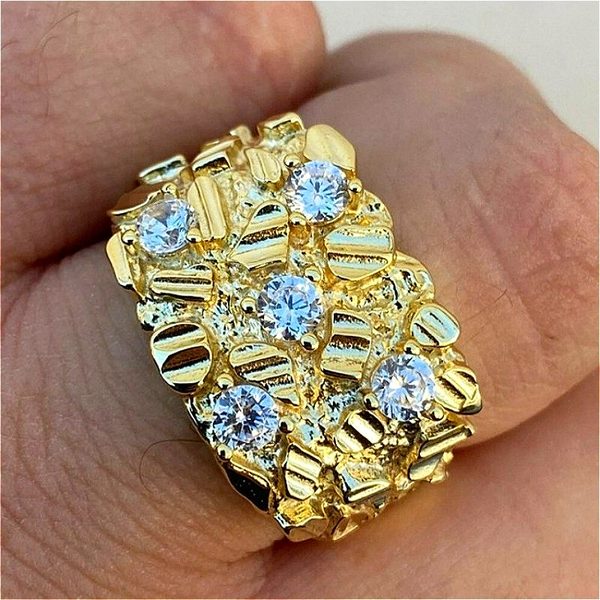
With other accessories: - Match chain metal tone to ring metal tone for matched aesthetic - Match chain metal tone to watch case tone for matched aesthetic - Match chain metal tone to bracelet metal tone
For UK men in 2026, committing to one metal tone (gold OR silver) across all chains, rings, bracelets, watches, and earrings produces the cleanest layered men’s jewellery aesthetic.
For two-chain stacks: - Both same width: balanced symmetric look - Different widths (e.g., 3mm + 5mm): asymmetric, more interesting
Chain width balance
For two-chain stacks: - Both same width: balanced symmetric look - Different widths (e.g., 3mm + 5mm): asymmetric, more interesting
For three-chain stacks: - Graduated widths (e.g., 2mm + 3mm + 5mm): natural visual hierarchy - Avoid three identical widths (reads monotonous)
General width rule: - The shortest chain in the stack is often the thinnest - The longest chain in the stack is often the thickest - This creates natural visual flow from neck to chest
Pendant + plain chain layering
A common men’s layered look in 2026 combines a plain chain with a pendant chain.
Standard pendant + chain layered combinations:
- 20” pendant chain (with pendant) + 22” plain chain (no pendant)
- 22” pendant chain + 24” plain chain
- 18” pendant chain + 22” plain chain (close visual stack)
Rules:
-
Pendant goes on shorter chain: places pendant in central visible position above plain chain.
-
Match metal tones: pendant chain and plain chain should be same metal tone.
-
Subtle pendant + statement plain chain: pair a small pendant with a thicker plain chain for visual balance.
-
Statement pendant + subtle plain chain: pair a large pendant with a thinner plain chain.
-
Avoid double-pendant stacks for casual layering: works for specific styling but is harder to pull off than pendant + plain.
A common men’s layered look in 2026 combines a plain chain with a pendant chain.
What to avoid
Common layering mistakes UK men make:
- Three chains crowded at same length: chains within 1” of each other tangle and read as costume.
- Mixed metals without thought: random gold + silver mixing reads as unintentional rather than styled.
- Too many heavy chains: stacking three 6mm+ chains reads as overscaled.
- Pendant on every chain: layered pendants compete for visual attention. One pendant in the stack is the rule.
- All identical chain styles: three Cuban chains at different lengths reads boring. Vary the styles.
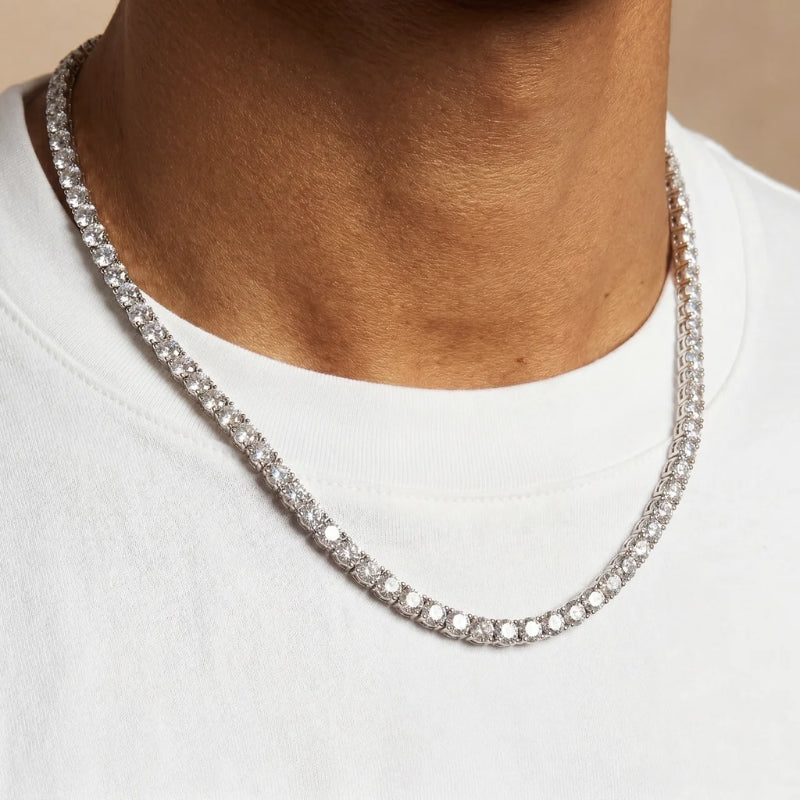
- Layering tennis chains with plain chains: stones compete with plain metal; harder to pull off than two plain chains.
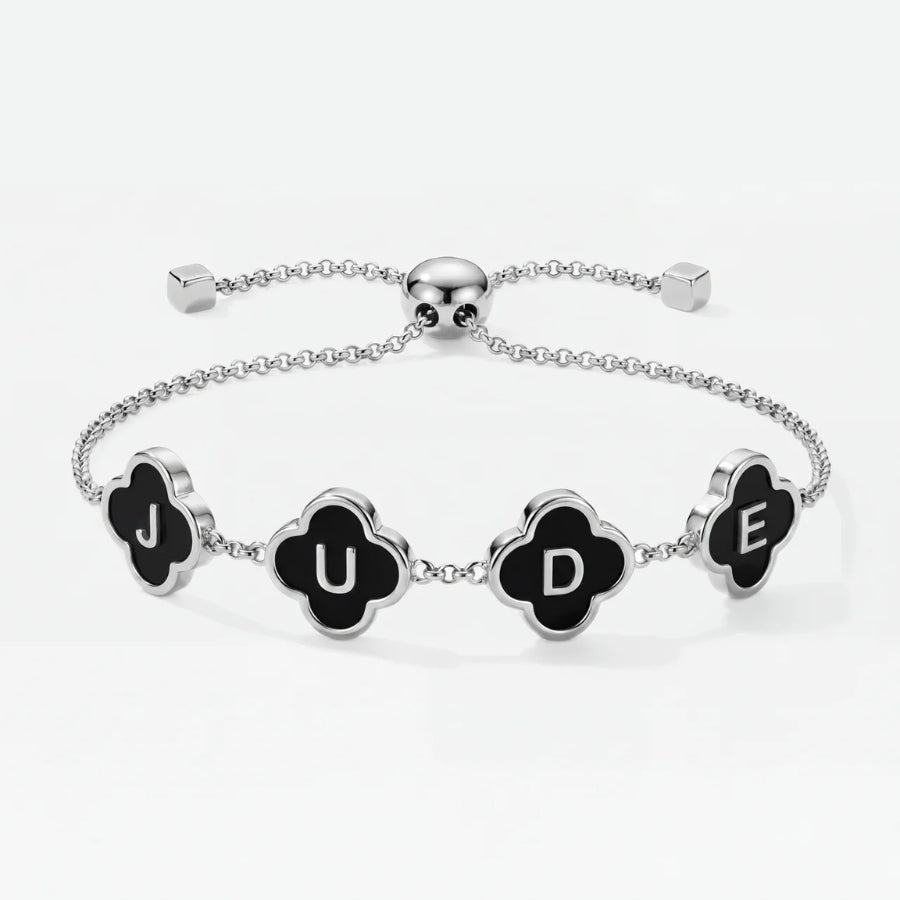
- Layering with bracelets too aggressively: multiple stacked chains + multiple stacked bracelets + multiple rings reads as overstyled. Pick a focus zone.
The photo test
The fastest way to know if a layered chain look works on you isn’t a mirror. It’s a photo.
Mirrors flatten and reverse the image. Photos capture the look as others see it, including the parts of the image you can’t watch yourself in the moment. The proportions, the spacing, the way the chains sit against your specific neck and chest shape, all of these read differently in a photo than in mirror reflection.
Try this. Set up a layered chain stack you’re considering. Take three photos: one straight-on, one at a slight angle from the side, one in motion (raising a glass, gesturing, leaning). Look at each photo critically. Does the layered look read as intentional? Does any chain look like it’s competing with the others? Does the stack add to the outfit or feel like it’s the outfit?
The photos reveal what the mirror hides. A two-chain stack that looks balanced in the mirror sometimes looks crowded in the side-angle photo. A three-chain stack that feels confident in the mirror sometimes reads as overdone in the motion photo. The mirror is not a reliable judge.
This is also why social media research isn’t entirely useless for chain styling decisions. Looking at how layered chains photograph on different body types, in different outfits, in different lighting, calibrates your sense for what works. You can borrow other men’s photographic styling experiments to refine your own choices before spending money on chains that may not work for you.
Three minutes of photos before committing to a layered look saves the frustration of buying a second chain that doesn’t pair as well as it should.
The fastest way to know if a layered chain look works on you isn’t a mirror. It’s a photo.
FAQs
How many chains should I layer?
Two chains is the safest starting point for most UK men in 2026. Three chains requires more confident styling. Four+ chains is rarely successful outside specific hip-hop or fashion contexts.
Should layered chains match the same chain style?
Mostly no. Layered chains should vary in style (e.g., one Cuban + one rope + one box) rather than being three identical chains. The variation creates visual interest.
Can I layer chains under a shirt?
Yes if the chains are subtle (under 4mm width each) and the shirt has a buttoned collar. Layered chains under a shirt read as restrained personal style. Visible only at the V of an unbuttoned collar.
How do I prevent layered chains from tangling?
- Choose chain styles that don’t catch easily (Cuban and box layer cleanly; rope can catch on adjacent chains).
- Use chain spacers or layered necklace separators (small device that holds chains apart).
- Ensure chain clasps are at the back, not the sides.
- Adjust chains periodically if they shift during the day.
What's the most popular UK men's layered chain look in 2026?
20” Cuban chain + 24” rope chain or pendant chain in matching gold tone is the dominant layered look across UK men 25-40 in 2026. The combination is established enough to read as classic rather than fashion-forward.
Can I layer chains with a watch and bracelets?
Yes but pick a focus zone. If chains are the styling focus, keep wrist accessories minimal (one bracelet max, plain watch). If wrist is the focus (stacked bracelets, statement watch), keep chains to one subtle piece. Both zones over-styled together reads as costume.
Built after wearing the others.
Different by design.
PVD-plated 316L. 1-2 micron thickness declared. 12-month tarnish guarantee in writing. Permanent buy one get one free across the full catalogue.
Browse Monrich → UK shipping 2-4 days / 30-day returns / no customs