
Gioielli da uomo resistenti al sudore 2027: PVD, placcato e massiccio a confronto
Human sweat has a pH between 4.5 and 7.0.

That’s mildly acidic, halfway between black coffee and pure water, but applied continuously to metal at body temperature it becomes one of the most aggressive everyday environments your jewellery faces. The pieces that survive it for years versus the ones that fail within months come down to one variable: the plating method.
This article compares the three plating/material categories that determine sweat resistance in men’s jewellery: PVD-plated 316L stainless steel (the gold-standard for active wear), traditional electroplating over brass or stainless steel (most budget pieces), and solid precious metals (gold, sterling silver). Each has a different sweat-resistance profile and different price band. This is the honest comparison for UK buyers in 2026.
I run Monrich, a UK men’s jewellery brand. Disclosure first.
You can see the current best-selling men's jewellery line-up for reference as you read.
What sweat does to jewellery

Sweat
Human sweat is salty (chloride salts, lactate, urea). These accelerate corrosion / plating wear on: - Electroplated jewellery (plating wears 30-50% faster with regular sweat exposure) - Brass / copper alloy pieces (the base metal can corrode) - Sterling silver (slight tarnish, polishable)
Impact
Weights, kettlebells, equipment. Hard impact can: - Bend chains or pendants - Scratch polished surfaces - Crack tungsten pieces - Loosen prong-set stones
Friction
Gloves, equipment grips, fabric. Continuous friction can: - Wear plating faster at contact points - Scratch polished surfaces - Loosen clasps over time
Heat
Some workout environments (hot yoga, sauna post-workout) can: - Loosen adhesives in resin / costume pieces - Slightly speed plating wear
Materials that survive sweat
Unplated 316L stainless steel
The base material is medical implant grade. Doesn’t corrode in sweat. Hard enough to resist most gym impact.
Trade-off: silver-tone only (no gold appearance unless plated).
PVD-plated 316L stainless steel
The PVD coating is much more resistant to sweat and chemical exposure than electroplating.
Real-world durability: 12+ months of regular gym wear (3+ sessions/week with shower after) before visible plating change.
Monrich pieces use PVD-plated 316L specifically designed for daily wear including gym.
Titanium
Lightweight, fully nickel-free, completely sweat-resistant. The premium gym jewellery material.
Trade-off: harder to manufacture, fewer design options, higher prices.
Solid gold (14K-22K)
The metal itself is gym-resistant. No plating to wear. Gold is too soft for serious impact (a heavy dumbbell on a solid gold ring will dent), so remove rings for heavy lifting.
Solid platinum
Hardest precious metal. Premium but maximum durability.
Trade-off: silver-tone only (no gold appearance unless plated).
Materials to avoid for daily wear

Electroplated stainless or brass jewellery
Across the UK D2C mid-tier category, many brands use electroplating without publishing the thickness. Industry-wide, electroplated finishes generally need more aftercare under gym conditions (sweat, friction, water exposure). Brands that publish microns let buyers pick the spec that suits their wear pattern.
Costume / cheap fashion jewellery
Brass / copper alloy bases can corrode underneath the plating with sweat exposure. Plating then flakes off. Pieces become unusable in 4-8 weeks of gym wear.
Pavé-set CZ pieces (tennis chains, iced pendants)
The prongs holding stones can loosen with impact. Single stones can come out. Repair is possible but expensive.
Rope chains (thin)
Small interlocking links can break under stress (caught on clothing, equipment). Thicker rope chains (5mm+) are more durable.
Beaded bracelets on elastic
The elastic weakens with sweat over time. Re-stringing required more often than for everyday wear.
Sterling silver in chlorine pool (gym swim)
Pool chlorine accelerates sterling silver oxidation. Not damaging short-term but visible over months.
Specific piece types and sweat compatibility
Chains
- PVD-plated 316L Cuban or curb: gym-safe daily
- PVD-plated thin rope: gym-safe but watch for catching on clothing
- Sterling silver chain: gym-safe but patinates faster from sweat
- Solid gold chain: gym-safe (avoid heavy impact)
- Thin electroplated chains: best kept away from heavy gym use, where sweat and friction accelerate finish change
Rings
- PVD-plated 316L band: gym-safe but remove for heavy lifting (impact can dent metal against finger bone)
- Sterling silver: gym-safe with care
- Tungsten: gym-safe but brittle (can crack on hard impact)
- Solid gold: remove for heavy lifting (metal is soft)
- Costume rings: avoid
Bracelets
- PVD-plated ID bracelet: gym-safe
- Sterling beaded bracelet: gym-safe but elastic weakens
- Leather wrap bracelet: avoid heavy sweat (damages leather)
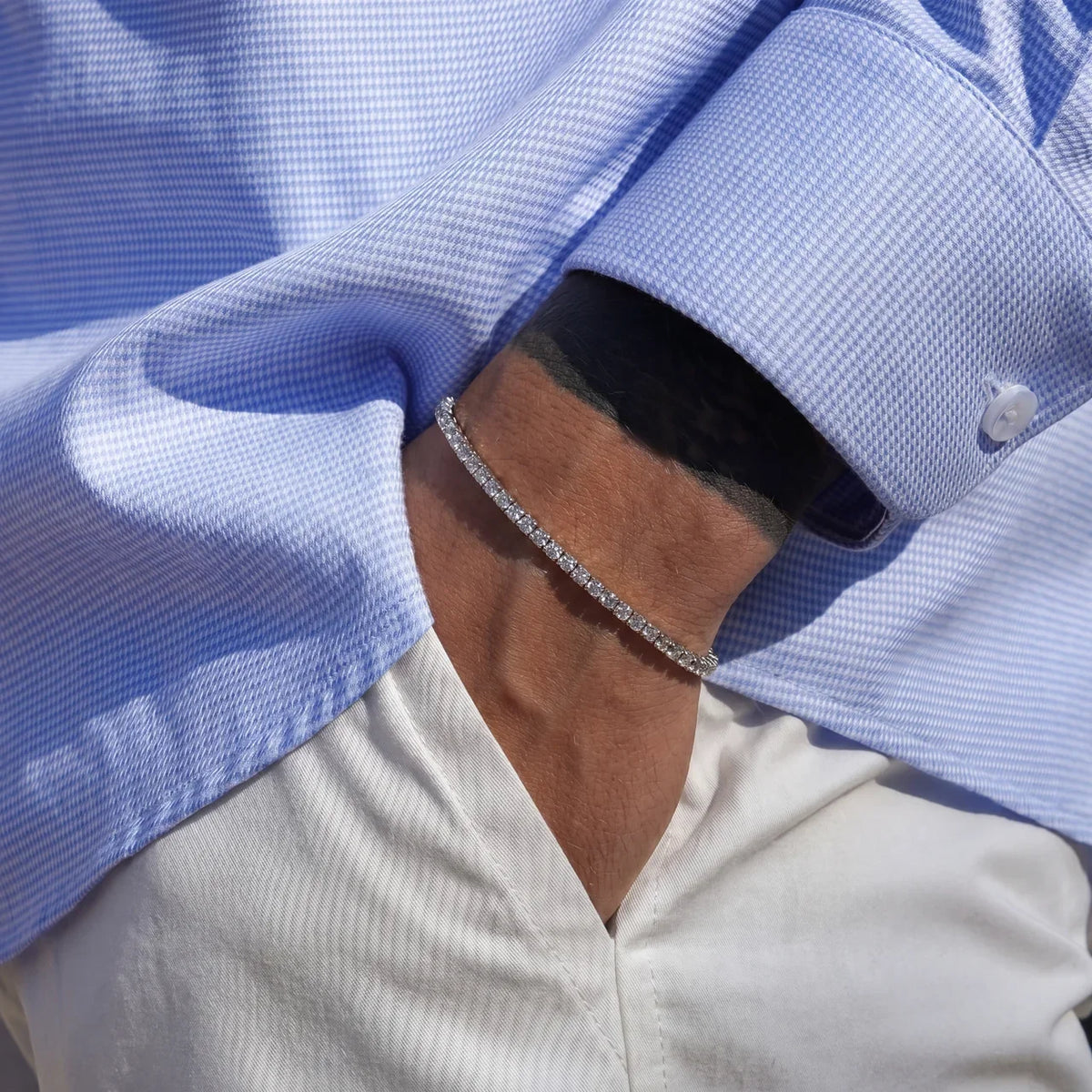
- Tennis bracelets with CZ: avoid (prongs loosen)
Pendants / Necklaces
- Dog tag PVD-plated: gym-safe
- Cross / pendant PVD-plated: gym-safe
- Pendants on chains caught on clothing: tuck inside shirt to prevent
That’s mildly acidic, halfway between black coffee and pure water, but applied continuously to metal at body temperature it becomes one of the most aggressive everyday environments your jewellery faces.
Care for sweat-exposed jewellery

After every gym session
- Rinse with fresh water if heavily sweaty
- Wipe with microfiber cloth
- Let air dry before storing
Weekly
- Inspect clasps and joining points for wear
- Check stones (if any) for looseness
- Wipe with mild soap solution if needed
Monthly
- More thorough cleaning (warm water, mild soap, soft toothbrush for crevices)
- Inspect chains for any link weakness
- Check rings for any dings or dents
Storage
- Don’t store sweaty / wet, dry first
- Keep separate from other gym gear (avoids transferring oils / chemicals)
- Use a small zippered pouch in gym bag
Best sweat-resistant jewellery brands UK 2026
Monrich
PVD-plated 316L designed specifically for daily wear including gym. 12-month tarnish guarantee. BOGO permanent. Entry £30. Browse waterproof-marked pieces.
Vitaly
PVD/IP plated 316L and titanium options. Industrial design. Entry £75 + UK customs.
Titanium specialists
For pure titanium gym jewellery: search “titanium men’s jewellery UK”, niche specialists make titanium chains and rings specifically for gym / sports.
Less suited to heavy daily gym wear:
- Thin electroplated pieces (any brand) where the plating thickness is not published. Across the category, gym sweat and friction accelerate finish change on electroplated finishes.
- Costume / fashion pieces with brass or copper alloy bases, which can corrode under heavy sweat exposure.
Most experienced gym men keep chains and bracelets on but remove rings for serious weight (deadlift, squat, clean).
Should you wear jewellery during workouts at all?
Practical case for wearing
- Daily-wear pieces (Cuban chain, signet ring, wedding band) become part of your identity. Removing them for gym creates “off-time” from your style.
- PVD-plated pieces are designed to handle gym wear with no issue.
- Sweat-tolerant materials exist precisely for this use case.
Practical case against wearing
- Heavy lifting risks: a wedding band on a finger pressed against a barbell can deform the band. A chain catching on equipment can break.
- Hygiene: sweat-soaked jewellery accumulates bacteria. Requires more cleaning.
- Other gym users: chunky chains catching on shared equipment can cause minor accidents.
Compromise: remove rings for heavy lifting
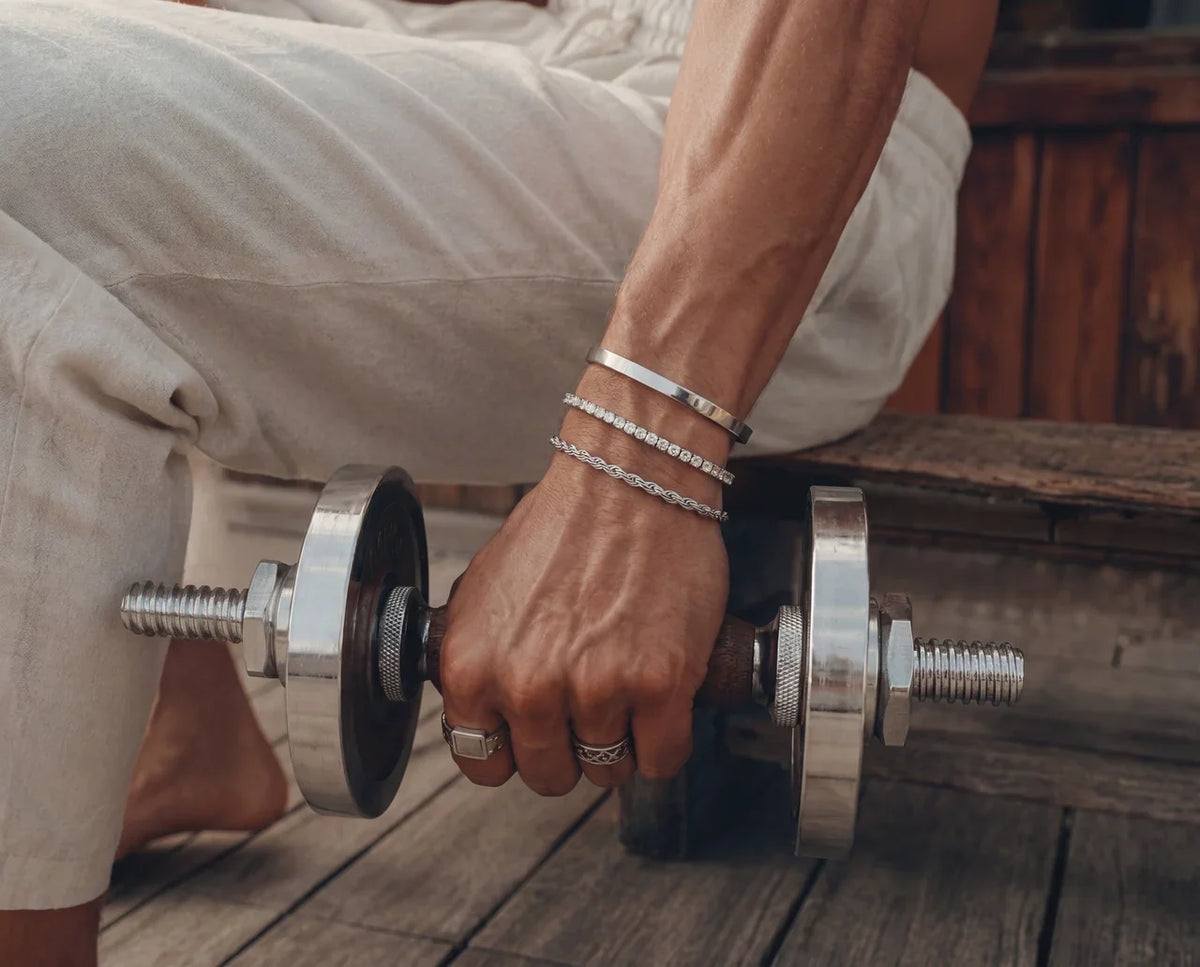
Most experienced gym men keep chains and bracelets on but remove rings for serious weight (deadlift, squat, clean). The metal-on-bone pressure is real.
For competitive sports
Most competitive sports prohibit jewellery during play (rugby, MMA, boxing). For training only, gym jewellery is generally OK.
FAQ
What jewellery is safe to wear at the gym?
PVD-plated 316L stainless steel, unplated 316L, titanium, and solid gold (with care for impact). Avoid electroplated jewellery (plating wears fast in sweat) and costume / brass jewellery (base metal corrodes).
Can I shower with my Monrich chain after the gym?
Yes. PVD-plated 316L is designed for water and sweat exposure. Showering with the chain on is fine and within the 12-month tarnish guarantee.
Will my chain tarnish from sweat?
Solid stainless steel and titanium do not tarnish. For plated pieces, lifespan depends on thickness and process. PVD plating at 1 to 2 microns (as used at Monrich) is engineered to withstand sweat, gym, and shower exposure, which is why we back it with a written 12-month anti-tarnish guarantee. Thinner electroplated finishes generally need more aftercare under heavy gym wear.
Should I take off my wedding ring at the gym?
For everyday gym work (cardio, light weights): not necessary. For heavy lifting (deadlift, squat, clean, snatch with high weights): yes, take it off. The metal-on-finger pressure can deform softer metals (gold) and is uncomfortable with harder metals (steel).
What's the best chain for gym wear?
PVD-plated 316L Cuban chain at 4-5mm width. Durable plating, link style is robust, doesn’t snag easily on equipment or clothing. Monrich Cuban chains are specifically gym-rated.
Do I need to clean my jewellery after the gym?
For PVD-plated pieces: a wipe with microfiber cloth is sufficient most days. Weekly water rinse and dry. For electroplated: more thorough cleaning every session to slow plating wear.
Built after wearing the others.
Different by design.
PVD-plated 316L. 1-2 micron thickness declared. 12-month tarnish guarantee in writing. Permanent buy one get one free across the full catalogue.
Browse Monrich → UK shipping 2-4 days / 30-day returns / no customs